If you ask me which is the most underrated training variable, my answer is one: recovery. Everyone thinks about volume, intensity, load progression. Few think about the fact that muscle doesn't grow while you train it — it grows in the 24-48 hours after, during recovery. If you don't recover, you don't grow. Period.
In this guide I'll explain the science of muscle recovery, what really works, what's marketing, and how to structure your weeks so your body responds instead of breaking.
What "recovering" means
Muscle recovery isn't just "waiting for the soreness to pass". It's an active process with three components:
- Tissue repair: training micro-lesions are repaired by satellite cells and ribosomes → supercompensation
- Energy recharge: muscle glycogen restored, creatine phosphate regenerated
- Neural recovery: the central nervous system (CNS) resets after maximal efforts
Timing:
- Muscle repair: 24-72h
- Glycogen recharge: 24-48h with adequate carbs
- CNS recovery: 48-96h after heavy sessions on fundamentals
If you train a muscle before the process is complete, you're not building: you're eroding.
Sleep: pillar number one
No supplement, massage or "miracle" technique beats sleep. During deep sleep (N3 phase) the body releases 97% of daily GH (growth hormone). If you sleep 5 hours instead of 8, you lose 60% of this peak.
How much to sleep
- Recreational athletes: 7-9 hours/night
- High-volume athletes: 8-10 hours
- Extreme loading phases: +30 min a night + 20-30 min afternoon nap
Sleep hygiene
- Same time every night (max 30 min variation)
- Dark bedroom (10 lux or less), cool (17-19°C), quiet
- No screens 30 min before
- No caffeine after 2:00 PM
- No alcohol within 3h of bed
Hard data (Dattilo 2011 study): sleeping 5h instead of 8h reduces protein synthesis 18% and increases catabolism 5-15%. In 2 weeks you measurably lose muscle.
Recovery nutrition
You can't separate nutrition and training. But for specific recovery, these are the priorities:
Post-workout protein
- 30-40 g within 3-4 hours of session end
- Ideally with 3-4 g of leucine (found in 30 g whey, 150 g meat, 4 eggs)
Carbs
They recharge glycogen. Quick rule:
- Heavy session: 1-1.2 g/kg/h in the 4h post-training
- Light session: normal daily distribution is enough
Hydration
- 30-40 ml/kg baseline (75 kg = 2.3-3 L per day)
- Extra 500-1000 ml for every hour of intense training
- Electrolytes (sodium, potassium, magnesium) if you sweat a lot
DOMS: the delayed soreness
DOMS (Delayed Onset Muscle Soreness) is the muscle pain you feel 24-72h after a hard workout. Cause: micro-lesions + inflammation + metabolite buildup.
What works to reduce them
- Light movement (walk, easy bike): speeds metabolite removal
- Protein + carbs post-workout: reduces duration
- Adequate sleep: the most effective
- Hot baths/alternating showers: moderate evidence
What does NOT work
- Long static stretching: studies show zero effect on DOMS (Herbert 2011)
- Ice/cryotherapy: acutely reduces pain, but ALSO ATTENUATES supercompensation → you grow less
- Anti-inflammatories like ibuprofen: same problem, reduce adaptation
When to worry
Normal DOMS: 2-5/10 intensity, 24-72h duration. If you feel sharp, localised pain that limits movement → it's not DOMS, it's an injury. Stop and assess.
Stretching: when and how
Stretching is one of the most misunderstood fitness topics. Science today is clear:
Static stretching BEFORE training
Harmful for strength and power performance. Reduces max strength 5-8% for 30-60 min (Simic 2013). Don't do it before heavy training.
Static stretching AFTER training
Neutral. Doesn't accelerate recovery, doesn't increase long-term flexibility if done sporadically.
Dynamic warm-up BEFORE
This works: circles, swings, specific activations. 5-10 min improve performance and reduce injury risk 20-30%.
Chronic flexibility
To improve range of motion you need 10+ minutes 3-4 times a week of sustained passive stretching. See our mobility notes below.
Massage and rollers: what the science says
Foam roller (self-myofascial)
Good evidence on:
- Reduction of perceived DOMS (MacDonald 2014)
- Acute range-of-motion increase (15-20 min)
- Improved subjective recovery
Does NOT change fascial structure ("releasing the fascia" is marketing). Works via neural stimulation.
Use: 30-60 sec per muscle group, 2-3 times on stiff areas.
Massage gun
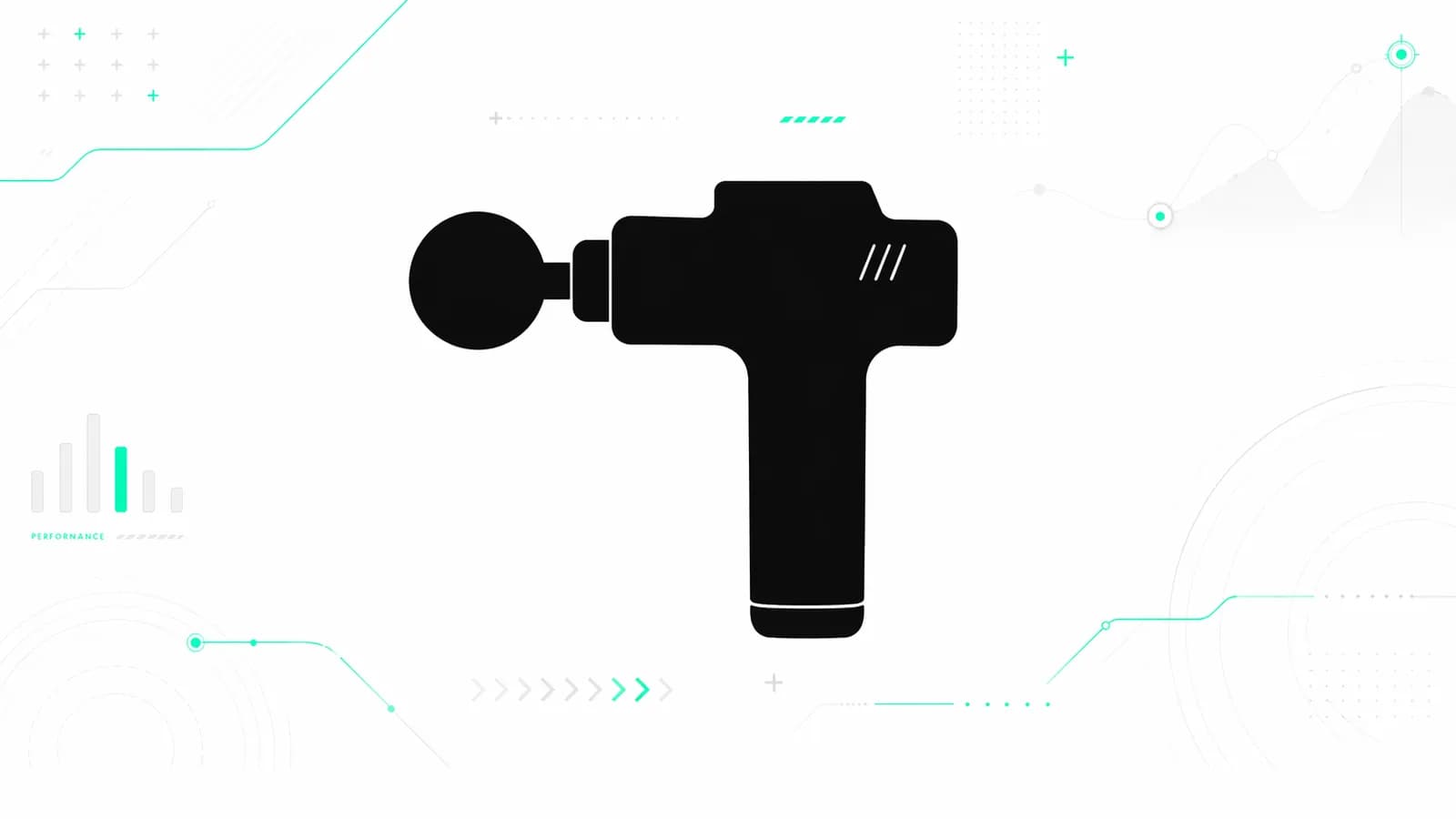
Same benefits as foam roller with less effort. Not magical, but useful.
Professional sports massage
A 60-min session every 2-3 weeks can reduce soreness and improve perceived recovery. Expensive, optional.
Deload: the unloading week
Every 4-8 weeks of hard training, plan an unloading week (deload). Options:
- Volume cut: same weight, -30-50% sets
- Intensity cut: same sets, -20% load
- Total rest: a week of full stop
Deload is NOT "being lazy". It's when the body really recovers from supercompensation accumulations. Those who don't deload stall or get injured.
Signs you need a deload now:
- Loads dropping 2 weeks in a row
- Motivation crashed
- Disturbed sleep despite fatigue
- Persistent joint pain
- Morning resting heart rate +5 bpm
Active vs passive recovery
Passive
Stay still. Useful after VERY hard sessions. Max 1-2 consecutive days.
Active
Walking, easy bike, light swim, yoga. 20-40 min at low intensity (HR 60-65% max). Studies show +10-20% recovery speed vs full rest. Preferable in most cases.
Stress management
Chronically elevated cortisol blocks muscle recovery. Typical causes:
- Stressful job
- Few hours of sleep
- Excessive caffeine
- Too much high-intensity cardio
Tools:
- Meditation / breathing: 10 min/day, clear evidence
- Time in nature: 30 min outdoor walk reduces cortisol
- Limit caffeine over 400 mg/day
How to plan sessions to maximise recovery
Rules:
- 48h between sessions of the same muscle group
- Max 2 consecutive high-intensity sessions, then 1 light or rest
- Don't heavy squat 3 days before heavy deadlifts
- Distribute volume: 2 sessions × 10 sets > 1 session × 20 sets
For intermediate and advanced athletes, optimal frequency per muscle group is 2x per week (Schoenfeld 2016). More risks compromising recovery.
When you need a PT
If you chronically recover badly, your program may be unbalanced. An online PT on Athleex can read your weekly performance and adjust volume and intensity in real time.
Watch the exercises in action
Related articles
- Mobility and stretching: the complete guide to a body that actually moves well
- Gym supplements: what actually works (and what's marketing)
- How many workouts per week you actually need to grow without breaking
Conclusion
Recovery isn't the "passive" part of training. It's where 80% of growth happens. An athlete who sleeps 8 hours, eats 1.8 g/kg of protein, and does 1 deload every 6 weeks will always beat an athlete who trains twice as much but sleeps 5 hours.
Priorities in order:
- Sleep (non-negotiable)
- Nutrition (calories, protein, hydration)
- Workout distribution (48h same group)
- Stress management
- Periodic deloads
Everything else (foam roller, massages, supplements) is marginal optimisation. Until the basics are solid, don't add layers.
Recover first, train after.